

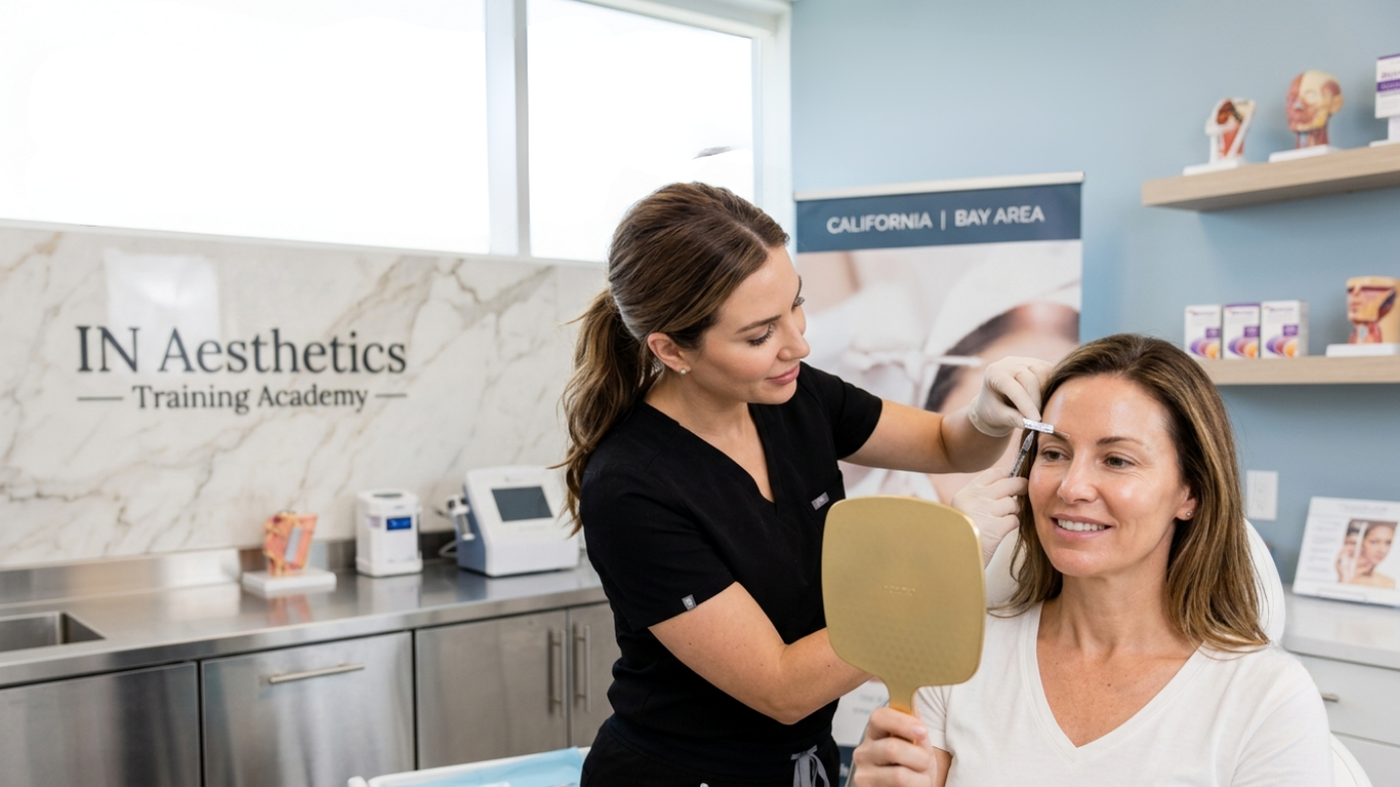
The medical aesthetics industry is experiencing unprecedented, rapid growth across California. In highly competitive, image-conscious markets like San Jose, San Francisco, and the broader Bay Area, more clients than ever are investing in their appearance, skin health, and long-term vitality. From foundational wrinkle-relaxers like Botox and classic dermal fillers to cutting-edge biostimulators and regenerative skin therapies, aesthetic medicine has firmly cemented itself as a vital pillar of modern wellness and self-care.
However, after years of treating patients clinically and mentoring licensed medical professionals through advanced clinical training, a fundamental truth becomes clear: Most clients are not chasing a flawless, filter-induced version of perfection. Instead, they are looking to feel refreshed, confident, healthy, and structurally restored—they simply want to look like a vibrant version of themselves.
This exact realization underscores why comprehensive, rigorous medical injector education is so critical. As aesthetic providers, our role extends far beyond executing isolated cosmetic procedures. We are structurally assessing dynamic facial architecture, mastering intricate vascular anatomy, building deep psychological trust, formulating long-term multi-modality treatment plans, and keeping patients safe.
Whether your practice offers neuromodulators, cross-linked hyaluronic acid fillers, hyperdilute biostimulators, or autologous regenerative therapies, your ability to deliver beautiful, natural, and safe outcomes depends entirely on your clinical training.
At IN Aesthetics Training Academy in California, we reject the notion that a weekend online course is sufficient to launch a successful career. Injectors require deep anatomical knowledge, sharp clinical judgment, ongoing mentorship, and extensive, supervised, hands-on experience with live patients.
The Strategic Value of Elite Injector Education
Before analyzing why patients book appointments, providers must understand the shifting landscape of medical aesthetics. The market is transitioning away from overt, over-filled modifications toward subtle, anatomy-driven restorations. For a licensed medical professional (such as an MD, DO, NP, PA, or RN) entering this field, this shift means your educational foundation must be flawless.
To help you understand both client motivations and the professional standards required to satisfy them, let’s explore the four primary reasons clients seek aesthetic procedures—and analyze why advanced, hands-on training is non-negotiable for the modern provider.
1. Clients Want to Feel More Confident (The Psychology of Aesthetic Medicine)
Emotional and psychological rejuvenation is the primary driver behind the booming medical aesthetics sector. When patients present for an initial consultation, they are rarely trying to alter their identity completely. Instead, they are looking to address specific changes that conflict with how they feel internally.
Common patient concerns include:
- Looking perpetually tired or exhausted despite getting adequate rest.
- Early structural volume loss in the midface and sub-orbicularis oculi fat pads.
- The formation of deep static lines, structural folds, and dynamic rhytids.
- Age-related skin laxity along the jawline and submental region.
When executed with precision and artistic balance, aesthetic treatments can profoundly improve a patient’s self-esteem. However, psychological confidence is fragile. A poor injection technique, an inappropriate product selection, overfilled tissues, unaddressed facial asymmetry, or a frozen, expressionless face can have devastating effects on a patient’s self-image and mental well-being.
Why Superficial Certification is Failing the Industry
This delicate balance is precisely why foundational Botox training in California must extend far beyond learning basic injection patterns. To protect patient confidence, a master injector must fully comprehend:
- Surgical and Non-Surgical Facial Anatomy: Identifying precise muscle origins, insertions, and depths to prevent adverse events like brow ptosis, lid ptosis, or asymmetric smiles.
- Rheology and Product Selection: Understanding why a high G-prime (structural) filler belongs on the periosteum, while a low G-prime, highly cohesive product is required for superficial, dynamic areas.
- The Art of the Holistic Assessment: Looking at the face as an interconnected ecosystem, rather than chasing an isolated wrinkle or a single fold.
At IN Aesthetics Training Academy in the Bay Area, we prioritize high-level anatomy and natural-looking outcomes over quick, commercial certifications. Patients deserve providers who invest in comprehensive education, not just a certificate to hang on the wall.
2. Clients Demand Natural Aging Support and Preventative Regenerative Treatments
The modern aesthetic consumer is highly informed. The days of heavy, unnatural modifications are rapidly giving way to the era of regenerative aesthetics and proactive pre-juvenation. Today’s patients are searching for subtle, proactive interventions that stimulate their body’s natural regenerative systems to build collagen, improve extracellular matrix health, and maintain skin youthfulness.
As a result, traditional dermal filler workflows are increasingly being paired with or replaced by highly sophisticated biostimulatory and cellular therapies. Patients throughout San Jose and California are actively seeking out providers skilled in:
- Radiesse Hyperdilute (Calcium Hydroxylapatite – CaHA): Utilized as a powerful subdermal biostimulator to trigger neocollagenesis, neoelastogenesis, and angiogenesis, improving skin tightening and dermal thickness without adding bulky volume.
- Platelet-Rich Plasma (PRP) and Platelet-Rich Fibrin (PRF): Harnessing autologous growth factors to accelerate cellular turnover, repair damaged tissue, and naturally rejuvenate the delicate periorbital and facial skin.
- Rejuran (Polynucleotides): Utilizing DNA fragments derived from salmon wild-type DNA to repair the skin barrier, reduce inflammation, and stimulate fibroblast activity at a deep cellular level.
- Advanced Medical Microneedling: Creating controlled micro-injuries to optimize transdermal delivery of therapeutics and induce structured mechanical remodeling of dermal collagen.
The Learning Curve of Regenerative Medicine
These advanced treatments carry a steeper learning curve than standard hyaluronic acid injections. Mastering a biostimulator injection course or a regenerative aesthetics training curriculum requires an intimate understanding of tissue physics, advanced reconstitution and dilution methodologies, precise depth placement (subdermal vs. deep dermal), and complex patient contraindications.
Without targeted, hands-on training, a provider risks suboptimal outcomes, superficial nodules, or delayed-onset granulomas. In an industry that evolves monthly, continuing clinical education is essential to ensure patient safety and maintain clinical excellence.
3. Clients Want to Look Refreshed — Not Overdone (The Mastery of Structural Balance)
The single most common phrase uttered during an aesthetic medical consultation is: “I just want to look refreshed, like I’ve had a long, restful vacation.”
Today’s consumers are highly aware of the risks of poor aesthetic work. They see migrated lip filler, over-projected cheeks, and distorted facial profiles on social media daily. Consequently, they are careful about choosing a clinician. They expect subtle, sophisticated corrections that preserve facial movement and respect their natural features.
Achieving this standard requires an advanced level of clinical artistry and anatomical skill. A highly trained injector does not follow generic templates; they adapt their approach to every patient by analyzing:
- Golden Ratio and Facial Proportions: Evaluating the relationship between the upper, middle, and lower thirds of the face to maintain proper sexual dimorphism and ethnic authenticity.
- Dynamic Facial Animation: Anticipating how a product placed in a resting face will behave when the patient laughs, smiles, talks, and expresses emotion.
- Full-Face Balancing: Understanding that correcting a deep nasolabial fold often requires restoring structural support to the deep pyriform space and lateral zygomatic arch first.
- Conservative Dosing Strategies: Recognizing that true facial rejuvenation is an iterative process requiring layered treatments over multiple sessions.
This standard of clinical excellence cannot be learned through pre-recorded online videos or passive observation. It requires rigorous, anatomy-based dermal filler training in California, supervised clinical repetition, expert peer-to-peer critique, and hands-on guidance.
At our premier San Jose injection training academy, we train nurses and medical practitioners to approach facial rejuvenation holistically, ensuring they never fall into the trap of chasing individual wrinkles.
4. Clients Need to Feel Safe and Clinically Secure (Complication Management & Ethics)
The technical execution of an injection is only one component of medical aesthetics. The psychological and ethical framework of patient care is just as critical.
Patients often feel highly vulnerable during an aesthetic assessment. They may feel anxious, self-conscious about their aging process, or hesitant due to a previous poor clinical experience elsewhere. An elite medical injector alleviates these anxieties by building trust through clinical honesty, comprehensive informed consent, transparent communication, and an uncompromising commitment to patient safety.
An expertly trained medical injector knows how to manage every aspect of the patient experience, including how to:
- Manage and Align Patient Expectations: Clearly identifying what non-surgical interventions can achieve versus what requires a surgical referral.
- Practice Ethical Refusal: Confidently saying “no” to a patient when additional treatment would lead to distortion, product migration, or psychological dysmorphia.
- Identify and Mitigate Complications Immediately: Recognizing the early signs of a catastrophic vascular occlusion, delayed-onset nodules, biofilm formation, or acute hypersensitivity reactions.
- Execute Emergency Protocols: Mastering the precise deployment of high-dose pulsatile hyaluronidase to reverse intravascular events swiftly and prevent tissue necrosis.
This is where the absolute value of premium nurse injector training in California becomes clear. Being a medical provider in this specialty is not a sales position; it is a serious medical practice. True clinical confidence does not come from hope; it comes from rigorous preparation, real-time clinical adjustments under expert supervision, and learning how to protect your patient’s health above all else.
Moving Beyond Theory: Why Hands-On Clinical Experience Changes Everything
If you are a licensed healthcare professional looking to step into medical aesthetics or expand your existing practice into advanced biostimulators, you must carefully evaluate your educational path.
| Feature / Training Type | Online Modules & Large Seminars | IN Aesthetics Academy Hands-On Training |
| Anatomical Safety Mastery | Low (Theoretical slides only) | Extremely High (Live palpation & guided depth mapping) |
| Live Patient Management | None (Passive observation only) | Comprehensive (Full assessment, injection, and evaluation) |
| Complication Drills | Basic text-based review | Rigorous (Step-by-step practical management protocols) |
| Instructor-to-Student Ratio | High (1:30+) | Elite Small Group Setting (Intimate personalized mentoring) |
| Immediate Clinical Readiness | Low (Requires secondary training) | High (Equipped with immediate practical confidence) |
While digital courses are excellent for reviewing basic theory, pharmacology, and legal concepts, they cannot simulate the tactile sensation of a needle passing through distinct fascial layers, the resistance of a cannula moving through subdermal tissue, or the real-time feedback of a live patient.
True clinical excellence requires a physical presence, immediate expert feedback, and supervised practice on diverse facial structures.
Elevate Your Aesthetic Practice with IN Aesthetics Training Academy
The California aesthetic market is growing rapidly, and patients are becoming highly selective about who they trust with their faces. Today’s consumers are bypassing low-cost, high-volume clinics in favor of highly educated, ethical, and meticulously trained medical injectors.
Investing in premier, high-tier education is the most effective way to safeguard your patients, build a highly profitable clinical practice, and stand out in competitive markets like San Jose and the Bay Area.
At IN Aesthetics Training Academy in San Jose, California, we train nurses, nurse practitioners, physician assistants, and physicians to become elite, safe, and highly artistic clinical injectors. Our comprehensive, anatomy-first, hands-on educational approach provides you with the technical skills, structural insights, and complication management protocols required to deliver exceptional patient outcomes.
Take the Next Step in Your Professional Career
Do not leave your medical aesthetic education to chance. Discover the difference that elite, small-group clinical mentoring can make for your practice.
- Are you ready to launch or elevate your aesthetic career? Explore our comprehensive foundational courses and masterclasses at IN Aesthetics Training Academy.
- Ready to master the future of anti-aging medicine? Secure your seat in our upcoming biostimulator injection course and specialized regenerative aesthetics training programs.
- Looking for elite hands-on clinical education in Northern California? Connect with our San Jose injection training academy admissions team today to review schedules, prerequisites, and personalized mentorship opportunities.
Your future patients deserve an exceptional, highly trained provider. Build your clinical career on a foundation of safety, anatomy, and outstanding results.